
In a study published in Biological Psychiatry, Cato Romero, Christiaan de Leeuw, Marijn Schipper, Bernardo Maciel, Martijn van den Heuvel, Rachel Brouwer, and Sophie van der Sluis from WP1 teamed up with colleagues Guus Smit and Frank Koopmans from WP3 to investigate why individuals diagnosed with schizophrenia tend to have shorter stature on average—a link first documented by Edward Burchard’s Physique and Psychosis nearly ninety years ago.
An association with height may not seem very remarkable at first; however, beyond schizophrenia, height has also been associated with hormonal imbalance, brain size, infection, nutrition, and socioeconomic status, among other factors. Such influences on physical growth might overlap with the processes that increase a person’s risk of schizophrenia. In the current study, the researchers sought to identify exactly which biological processes are shared between schizophrenia and height using genetic data, and to see whether this overlap can offer new clues about how schizophrenia develops.
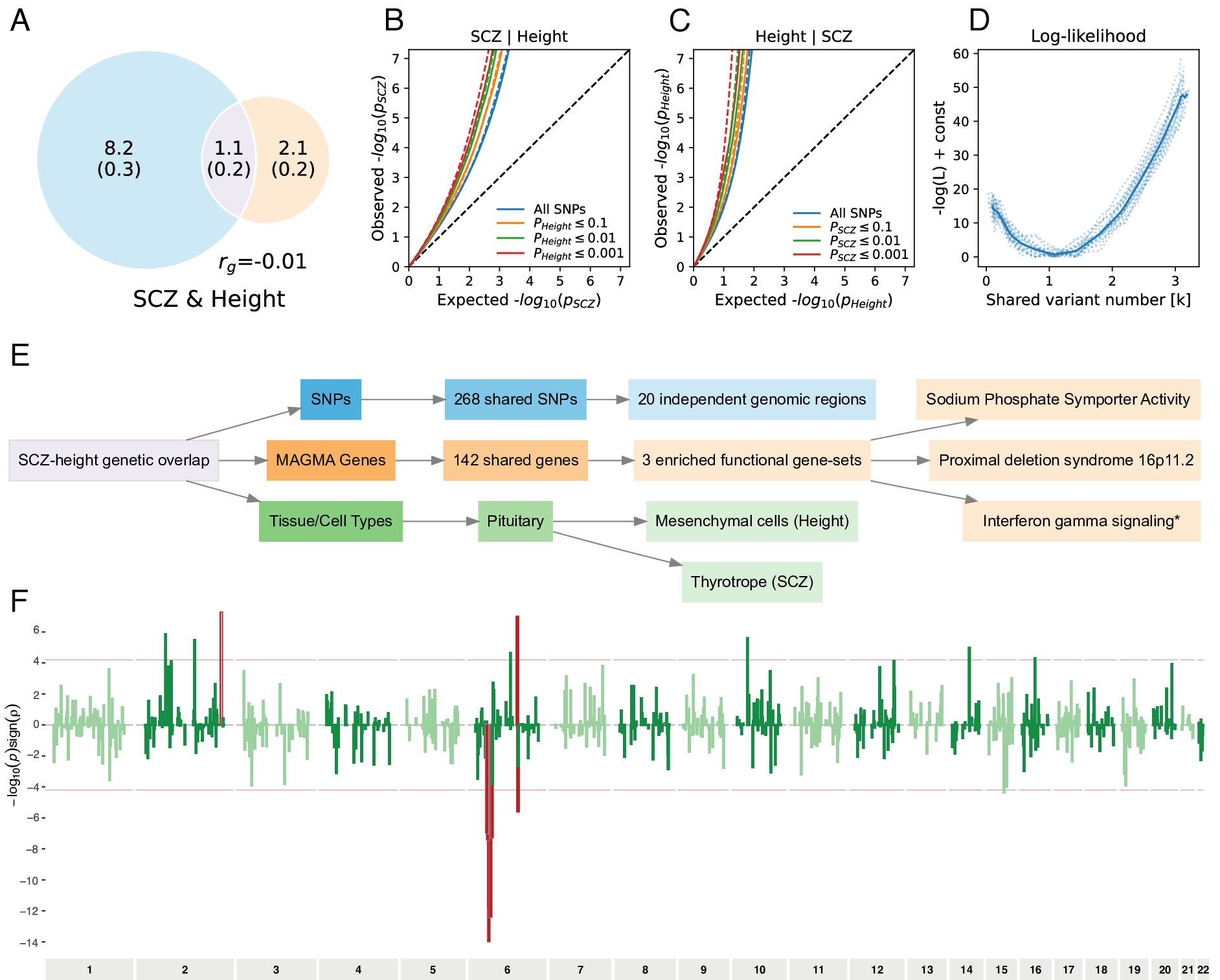
Involvement of the pituitary and immune system on schizophrenia risk
Leveraging large-scale genome-wide association studies (GWAS), the team identified 142 genes that appear to be involved in both height and schizophrenia. Many of these genes are highly active in the pituitary gland—specifically in thyrotropic cells, which secrete the thyroid-stimulating hormone responsible for regulating key processes such as metabolism, energy balance, and growth. These shared genes also point to immune system involvement; a newly developed analytic method revealed that genetic signals for schizophrenia and height overlap substantially with those for white blood cells (particularly lymphocytes). Chronic inflammation has long been associated with schizophrenia and could diminish the resources available for physical growth, potentially explaining this subtle height difference.
To confirm the involvement of certain high-likelihood genes—detected using FLAMES, a WP1 gene prioritization tool developed by Marijn Schipper—the investigators worked with Prof. Guus Smit and Dr. Frank Koopmans, analyzing patient brain proteomics to validate their significance. While these findings do not immediately translate to clinical practice, they open new avenues for studying biomarkers—such as thyroid and immune markers—that could be valuable in identifying individuals at risk of schizophrenia risk. Furthermore these findings serve to illustrates how the plethora of publicly available GWAS data for epidemiologically relevant traits can be used to formulate testable hypotheses for the other WPs in the Brainscapes consortium regarding the biology underlying observed comorbidities of psychiatric traits.
The article can be found here: https://www.biologicalpsychiatryjournal.com/article/S0006-3223(25)01018-2/fulltext