
The next step in brain related research
We won’t stop until we know it all, by using 5 complementing strategies:

Single cell resolution

Zoom in on connections

From cell to circuit to behavior

Translation into treatment strategies
News
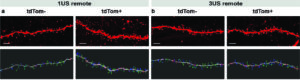 The intensity of a threatening experience shapes synaptic changes on cortical engram cells October 12, 2026 - A new study published in Nature Communications reveals that memory-encoding cortical neurons functionally contribute to remote memory retrieval after a mild, but not strong, aversive event. Several BRAINSCAPES members contributed to this work, including Dr. Miodrag Mitric (former member), Dr. Sanne Beerens, Prof. dr. Guus Smit, Dr. Priyanka Rao-Ruiz and Dr. Michel van den Oever.… Read More
 Dr. Janina Kupke awarded NWO Veni grant August 4, 2026 - Janina Kupke has been awarded an NWO Veni grant for her project Bridging the epigenome and the synapse: resolving how memories persist. Memories depend on lasting changes in the connections between specific brain cells. Yet the proteins that form these connections are continuously replaced. With support of the Veni grant, Dr. Kupke will investigate whether epigenetic mechanisms help… Read More
 How does your DNA make your brain unique? April 2, 2026 - Brains are not only shaped by our experience, but also by our genes. A new study led by neuroscientists Bernardo Maciel and Martijn van den Heuvel found that at least one-third of our brain connections are heritable. Read More
 Grants for BRAINSCAPES young researchers Wightman, Beerens and Kupke to advance memory-focused research on AD and PTSD December 1, 2025 - Recently three postdoctoral researchers from the Vrije Universiteit Amsterdam, and part of the BRAINSCAPES consortium, have received important funding. Alzheimer Nederland awarded €121,650 to Dr. Douglas Wightman (Complex Traits Genetics lab) to investigate genetic and environmental prediction of Alzheimer’s disease, while NWO awarded XS grants (€ 50,000) to both Dr. Sanne Beerens and Dr. Janina… Read More
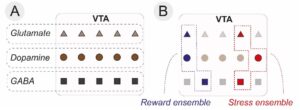 Reward and Stress is orchestrated by small ensembles of neurons in the midbrain April 9, 2025 - How do small groups of neurons decide whether we approach a reward or avoid a threat? In a study published April 2nd 2025 in Nature Communications, Frank Meye’s lab at UMC Utrecht shows that distinct neuronal clusters (i.e. neuronal ensembles) in the ventral tegmental area (VTA) are essential for encoding positive and negative experiences. Read More
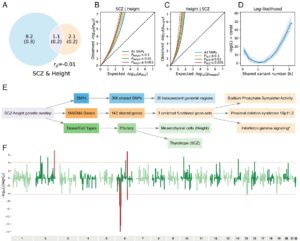 Immune-developmental processes contribute to schizophrenia risk: insights from a genetic overlap study with height March 13, 2025 - In a study published in Biological Psychiatry, Cato Romero, Christiaan de Leeuw, Marijn Schipper, Bernardo Maciel, Martijn van den Heuvel, Rachel Brouwer, and Sophie van der Sluis from WP1 teamed up with colleagues Guus Smit and Frank Koopmans from WP3 to investigate why individuals diagnosed with schizophrenia tend to have shorter stature on average—a link… Read More
 New AI tool helps to identify disease-related genes, boosting drug discovery February 13, 2025 - BRAINSCAPES scientists have developed a powerful new tool to pinpoint genes most likely causally linked to diseases, potentially accelerating drug development and advancing our understanding of disease biology. Read More
 Amsterdam UMC fellowship awarded to Dr. Danai Riga. October 31, 2024 - Recently BRAINSCAPES member Dr. Danai Riga was awarded the Amsterdam UMC fellowship. The fellowship (750K euro) will support here in establishing her independent research line and expand her research group. As of the first of November, Dr. Riga starts her new position as team leader within the Functional Genomics (FGA) group of the CNCR. With… Read More
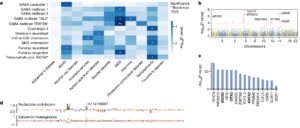 A chromatin-accessibility map of the human embryonic brain May 29, 2024 - Through a tightly organized cascade of patterning, specification and differentiation events, the human brain develops into a highly complex system capable of unique cognitive abilities beyond those of other mammals. Although gene expression across the developing brain has been described at single-cell resolution, similar atlases of chromatin accessibility have been primarily focused on the regulatory… Read More
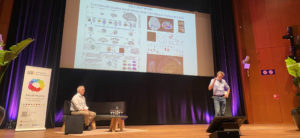 About the strength of consortia (part 1) January 25, 2024 - On 12 December 2023 the Annual Amsterdam Neuroscience meeting took place at the RAI Amsterdam. In the afternoon a special session was dedicated to “Consortia at work”. Different “duos” involved in large consortia explained the strength and added value of these collaborative initiatives. In this first part we highlight the talk by Prof. dr. Huib… Read More