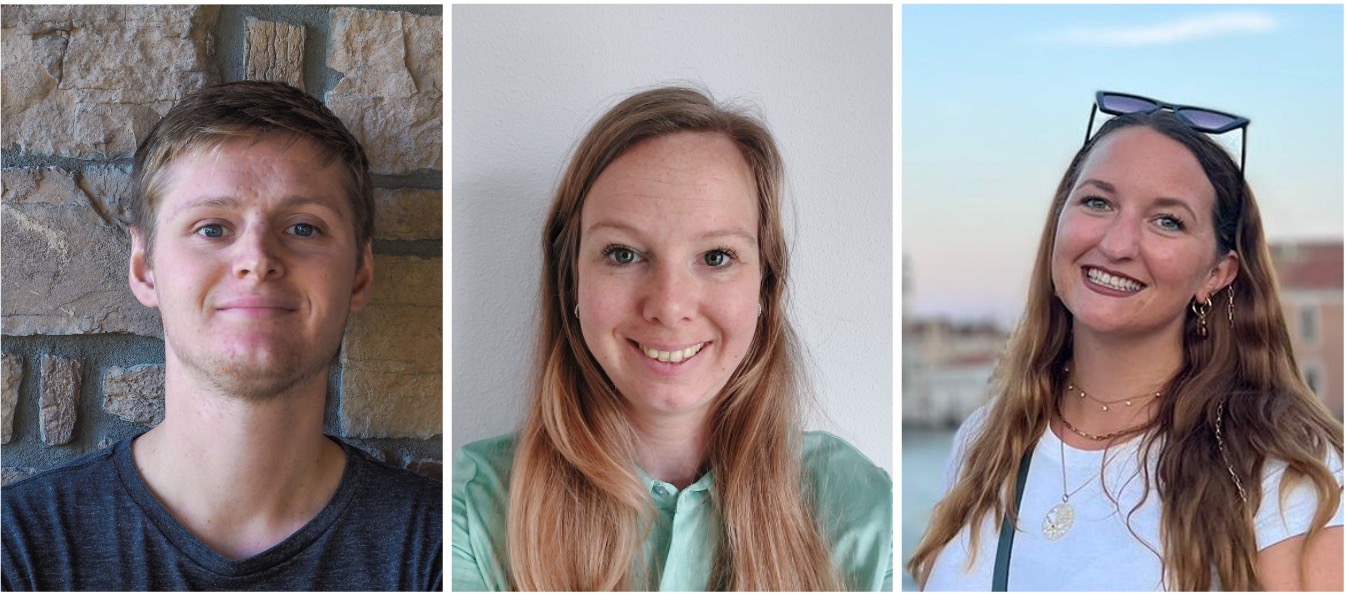
Recently three postdoctoral researchers from the Vrije Universiteit Amsterdam, and part of the BRAINSCAPES consortium, have received important funding. Alzheimer Nederland awarded €121,650 to Dr. Douglas Wightman (Complex Traits Genetics lab) to investigate genetic and environmental prediction of Alzheimer’s disease, while NWO awarded XS grants (€ 50,000) to both Dr. Sanne Beerens and Dr. Janina Kupke (Molecular and Cellular Neurobiology lab) to investigate how synapses on engram neurons (specific brain cells that store a memory) change to stabilize or modify memories. The three projects focus on advancing diagnostics and treatment of memory-related disorders, and build upon the work done in BRAINSCAPES.
Alzheimer’s disease (AD) presents later in life but the biological processes that contribute to the disease development start well before symptom onset. Early prediction of AD risk before symptom onset would be beneficial in directing individuals to care earlier and may allow for more effective treatment.
Douglas Wightman’s research aims to prioritize genetic and environmental factors that can accurately assess AD risk. He will use machine learning methods to combine genetic and environmental risks to better predict AD disease. There is a specific aim to create a minimal model that limits the number of features for easy clinical implementation. This project can be expanded to include other data generated within BRAINSCAPES, like AD scRNA-seq data.
The projects of Sanne Beerens and Janina Kupke instead aim to reveal how engram neurons store and adapt memories, and uncover new targets that may be new entry points for treatment of memory loss in AD, age-related cognitive decline, and the persistence of traumatic memories in PTSD. Both projects may provide molecular insights that can be integrated with BRAINSCAPES’ multi-omics and GWAS datasets, creating new opportunities for cross-scale discovery within the consortium. Specifically, Sanne Beerens will investigate how different intensities of aversive experiences alter synaptic properties of engram neurons in the prefrontal cortex. This could explain why traumatic memories in post-traumatic stress disorder (PTSD) are so persistent while other fear memories fade. Janina Kupke will study whether DNA methylation, a lasting chemical mark on DNA, helps engram neurons maintain stable synaptic connections over time. Using advanced genetic tools and synapse-specific proteomics, she will map the protein landscape of engram synapses to reveal the molecular signatures that keep memories alive.
“Overall, the three achievements reflect how BRAINSCAPES offers a platform for young scientists to develop and expand their own ideas, serving as a springboard toward independent research careers.”